
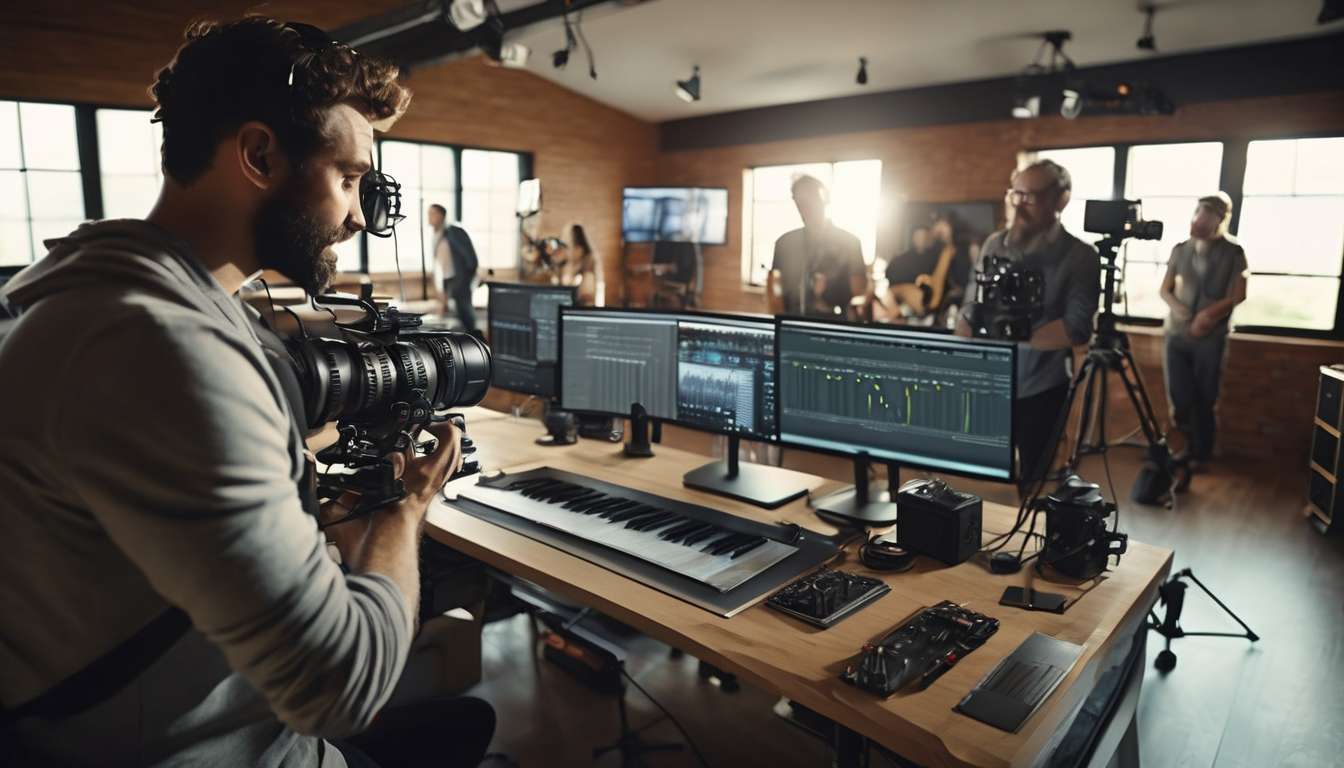
Just as a conductor translates a score into orchestral motion, we translate lived experience into compelling media — an unexpected connection that reshapes how adult media production teams learn.
We draw on adult education principles, not merely technical workshops, to create training that honors prior knowledge, fosters peer learning, and adapts to complex schedules.
By blending instructional design with production workflows, we help teams move from isolated skill drills to integrated practice.
- Scripting, shooting, and post-production become opportunities for reflective growth.
- Learning occurs in context rather than in a separate classroom.
Our approach reframes roles: trainers become collaborators and trainees become co-creators.
- This shift supports peer feedback, shared problem-solving, and co-designed solutions.
We prioritize scalable methods that respect adults’ need for relevance and autonomy.
- Microlearning for focused, on-demand skill boosts.
- Mentorship circles for peer support and distributed expertise.
- Hands-on labs for experiential, production-centered practice.
Ultimately, this cross-pollination between pedagogy and production empowers teams to produce higher-quality content more efficiently while sustaining professional development as an ongoing, collaborative practice.
Aligning Training with Practice
We align training directly with on-set workflows so team members learn skills they’ll use immediately when they return to production.
We design workplace learning that maps to real shoot days.
- We break complex tasks into microlearning modules that fit between calls and rehearsals.
- These short modules let everyone build confidence without feeling singled out or overwhelmed.
We pair focused lessons with peer mentorship circles.
- Experienced crew share concrete techniques and provide short feedback loops.
- These relationships create a supportive culture and normalize ongoing growth.
We use practical tools and drills so learners can immediately apply new methods.
- Checklists
- Short video demos
- Quick practice drills that mirror common scenarios
We schedule brief debriefs after shifts to transfer insights from practice into habit.
By aligning content, timing, and social support, we help every team member feel included in improvement efforts and ready to contribute at a high level.
Our approach keeps training practical, respectful, and tightly integrated with the work everyone already values.
Honoring Prior Experience
Map past roles and skills before designing training.
We start by mapping each team member’s past roles and skills so we can build training that respects what they already know and fills real gaps.
Acknowledge prior experience as an asset.
- Veteran editors’ shortcuts, freelance producers’ client handling, and community reporters’ storytelling instincts all shape our approach.
Invite self-identified strengths and preferred learning modes.
- Contributors are asked to flag strengths and preferred learning modes so workplace learning becomes tailored, not generic.
Design microlearning that fits busy schedules.
- Create short modules that slot into workflows and reinforce existing practices while scaffolding new ones.
Document transferable skills and create role profiles.
- Role profiles validate contributions and show how each person’s history fits the team’s goals.
Use growth-focused assessment and celebrate small wins.
- Assessments emphasize progress from current baselines rather than punitive benchmarks.
- Recognize and celebrate small, incremental achievements to maintain motivation.
Plan peer mentorship in authentic contexts.
- Pair experienced staff with newcomers so mentorship preserves dignity, builds trust, and embeds learning in real work.
Why this matters.
By honoring prior experience and building on real competence, we make training efficient, equitable, and relevant.
Peer Learning Structures
We’ll build repeatable, low-friction peer learning structures that let teammates teach, test, and iterate skills together during real projects.
We create small, routine moments—pair-edit sessions, short demos, and quick feedback loops—that normalize asking for help and sharing wins.
These structures make workplace learning part of our workflow, not an added task, so everyone feels included and valued.
We pair experienced folks with newer teammates through intentional peer mentorship that focuses on goals, not hierarchy.
- Mentors guide.
- Mentees practice.
- Both reflect.
We use microlearning bursts—five- to ten-minute how-tos and focused checklists—so skills are practiced in context and retained.
Meetings include rotating mini-presentations where teammates teach one skill and get immediate feedback, reinforcing ownership and trust.
We track small improvements with simple metrics and celebrate collective progress.
By embedding peer mentorship, microlearning, and workplace learning into daily practice, we build a culture where everyone teaches and grows together, and nobody learns alone.
Flexible Scheduling Models
Flexible schedules to balance work, learning, and client needs.
We’ll offer staggered shifts, core-hour windows, and project-based time blocks so team members can balance deep creative work, client needs, and ongoing skill development.
Predictable rhythms that enable contribution and belonging.
Some team members will concentrate mornings, others will reserve afternoons for collaboration, and we will all meet during core hours for updates. These patterns support workplace learning by embedding short, intentional learning moments into the day without overloading anyone.
Peer mentorship rotations to nurture connection and shared responsibility.
- Pair mentors and mentees on rotating schedules so both parties find times that suit their calendars.
- Rotate responsibilities to spread coaching experience and reduce burnout.
Microlearning integrated into the flow of work.
- Schedule brief microlearning sessions (10–20 minutes) such as demos, quick feedback rounds, and targeted tutorials.
- Fit these sessions between edits and client calls to minimize disruption.
Measure and iterate for equity and reduced friction.
- Track participation and learning outcomes.
- Use the data to iterate schedules and reduce barriers.
- Adjust practices to improve fairness and access.
Design flexibility around team needs (not rigid rules).
By centering flexibility on team needs, we build a steady, inclusive training environment where people can grow, contribute, feel seen, and keep production on track.
Integrated Skills Labs
We will build integrated skills labs that simulate real production scenarios so teams can practice technical, creative, and client-facing skills in a low-risk, feedback-rich environment.
We design labs that mirror our workflows so everyone feels included and capable.
- Elements:
- Hands-on stations for practicing real tasks.
- Shared debriefs to surface learnings and align on improvements.
- Rotating roles so team members experience different responsibilities.
These sessions support workplace learning by embedding real tasks into scheduled practice.
- Outcomes:
- Immediate application of new tools and workflows.
- Reinforcement of relevance and transfer to daily work.
We pair peer mentorship with structured exercises to distribute expertise and strengthen relationships.
- Features:
- Experienced teammates coach newer members in situ.
- Short, focused modules that reinforce competencies without overwhelming schedules.
- Targeted assessments to track progress and adjust challenge levels.
Labs foster psychological safety: mistakes become learning data, not stigma.
- Practices:
- Constructive, specific feedback.
- Centering belonging and practical practice.
- Collaborative reflection to make continuous improvement visible and equitable.
Result: Integrated skills labs help every team member grow their confidence and contribution to shared production goals.
Microlearning for Production
We deliver short, focused lessons designers can complete between shoots so crews can learn just-in-time skills without disrupting production.
We design microlearning modules that respect schedules and set realities.
- Five- to ten-minute videos
- Quick checklists
- Hands-on prompts crew members can apply immediately
We center workplace learning around practical tasks so everyone sees direct payoff.
- Camera settings
- Sound checks
- Lighting tweaks
We build in opportunities for peer mentorship to reinforce skills and strengthen team bonds.
- Paired tasks
- Brief debriefs
We track progress and celebrate small wins to foster belonging.
- Simple, shared dashboards
- Regular recognition of milestones
We keep content modular and searchable so anyone can grab what they need on call.
We iterate based on crew feedback to keep lessons relevant and respectful of diverse roles.
We encourage experimentation and low-stakes practice during downtime, making continuous improvement feel natural rather than burdensome.
Microlearning helps us grow together—efficiently and inclusively—while keeping production moving.
Mentorship and Circles
We pair seasoned crew members with newer hires in small, rotating circles so everyone gets regular guidance, feedback, and chances to lead.
In these circles, we build trust quickly by sharing real tasks, debriefing shoots, and celebrating small wins.
Our approach blends workplace learning with intentional peer mentorship:
- participants teach one another,
- model best practices,
- surface practical tips that stick.
We use short, focused microlearning bursts—five- to ten-minute demos, checklist reviews, and quick critiques—so peers can apply lessons between shifts.
Circles meet weekly, rotate roles, and keep agendas tight to respect production schedules.
Feedback is structured as questions and offers, so folks feel safe contributing and asking for help.
That sense of belonging boosts retention and skill transfer:
- members move from observer to contributor faster than in isolated training,
- participation is tracked,
- cross-department pairing is encouraged,
- circle prompts are refreshed regularly.
The result: mentoring stays relevant, hands-on, and rooted in the day-to-day work everyone shares.
Measuring Impact and Growth
We’ll track measurable indicators—like skill progression, retention rates, and on-set performance metrics—to verify that our mentorship circles are improving competence and career growth.
We’ll design simple dashboards that show workplace learning outcomes, linking course completions and microlearning bursts to observable behavior change.
We’ll collect regular self-assessments and supervisor observations so everyone sees progress and areas to strengthen.
We’ll measure peer mentorship effectiveness by monitoring pairing longevity, knowledge-transfer tasks completed, and mentee advancement into new roles.
We’ll correlate attendance at coaching sessions with reductions in error rates and faster setup times, proving practical value.
We’ll run short impact surveys after microlearning modules to capture immediate relevance and follow up at 90 days to confirm sustained adoption.
We’ll share results transparently, celebrate collective wins, and adjust learning pathways where gaps appear.
By valuing data and community feedback, we’ll keep refining programs so every team member feels supported, sees their growth, and knows they belong to a learning workplace.
How do you secure funding or sponsorships specifically for the training component without diverting resources from production costs?
We’ll target training-specific grants, foundations, and workforce development funds.
Pitch them as inclusion-building investments that don’t touch production budgets.
We’ll seek sponsorships tied to skill-building outcomes.
Offer named scholarships or branded workshops.
Partner with local colleges for subsidized instruction.
We’ll transparently separate budget lines, report impact metrics, and invite sponsors to celebrate learner achievements so everyone feels valued and accountable.
What legal and copyright considerations should trainees be taught early, and who is responsible if mistakes are made on a production?
Teach core legal concepts early.
We should teach trainees copyright basics, fair use, licensing, model/release forms, attribution, and privacy laws early in training to create a strong foundation for legally sound work.
Emphasize contract and asset management.
We should cover contract terms and chain-of-custody for assets, including how to document transfers, versions, and custody to prevent disputes and preserve evidence of clearance.
Stress documentation and clearance processes.
We’ll emphasize documentation and clearance processes so that permissions, licenses, and releases are recorded and easily accessible.
Clarify liability and responsibility.
We’ll teach who holds liability:
- Producers and rights-holders are primarily responsible.
- Individuals can be liable for negligent misuse.
Establish roles, protections, and review protocols.
We’ll establish clear roles and responsibilities, plus:
- Insurance coverage and limits,
- Indemnities and contractual protections,
- Regular review and audit protocols,
- Escalation paths so everyone feels supported and accountable.
How do you evaluate and select external trainers or partners to ensure they align with your team’s cultural values and production goals?
We start by asking how a trainer or partner will fit our culture and production goals.
We listen for evidence of shared values and a collaborative spirit.
We check work samples, references, and inclusivity practices.
We run a small pilot project to see how they communicate and adapt.
We prioritize transparency about processes, conflict resolution, and accessibility.
We choose partners who make our team feel respected, supported, and excited to create together.
Conclusion
You’re building training that actually fits how your adult media teams work — respecting what people already know, creating peer-learning systems, and offering flexible schedules.
Use integrated skills labs, microlearning bites, and mentorship circles so staff can practice and grow without disrupting production.
Keep measuring impact with clear, simple metrics so you can iterate.
When you align learning with practice, you’ll boost team confidence, creativity, and the quality of your media output.