
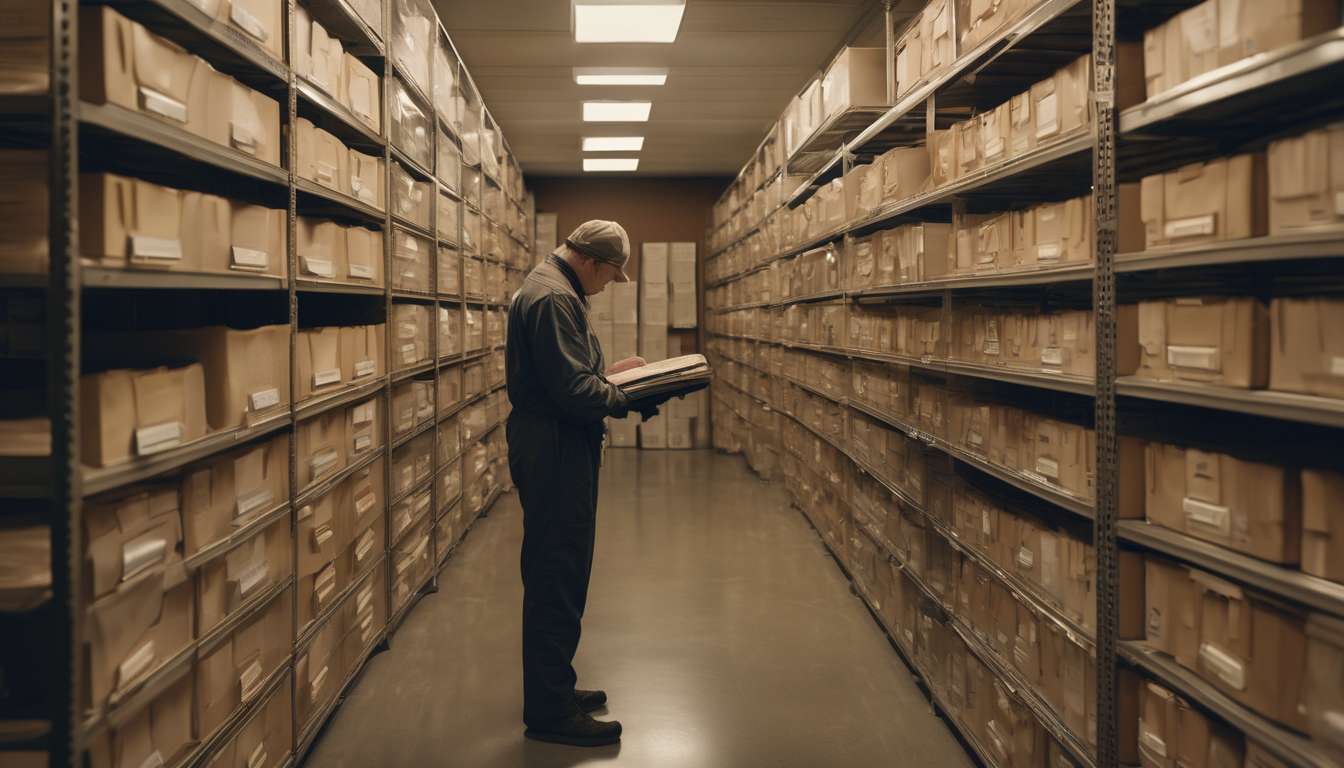
Just because adult media is often dismissed as ephemeral entertainment, many assume its business records lack long-term value. We disagree.
As archivists, researchers, and industry veterans, we recognize that contracts, distribution logs, financial ledgers, and promotional materials reveal complex histories of labor, law, technology, and culture.
Preserving these records allows us to trace shifts in regulation, the evolution of consent practices, the economics of independent production, and the ways marginalized creators navigated stigma.
By treating adult media business records with the same archival rigor applied to more "respectable" industries, we challenge moralistic erasures and build a fuller, more honest documentary record.
Long-term archives safeguard evidence that informs scholarship, shapes policy, and supports legal claims—often decades after original transactions.
We must therefore confront misconceptions that these materials are unworthy of preservation and commit resources and ethical frameworks to ensure they remain accessible for future inquiry and accountability.
Historical Value of Records
We recognize that adult media records capture social attitudes, legal changes, and technological shifts that scholars and policymakers need to study over time.
We value archival preservation because it helps communities see how norms evolved and how industry practices affected people’s lives.
We’re committed to collecting consent documentation so future researchers understand the context in which materials were created and can respect contributors’ rights.
We also preserve labor records to show who worked, how work was organized, and how compensation and conditions changed.
By maintaining clear inventories and accessible descriptions, we make these materials welcoming to researchers, advocates, and community members who want to learn together.
We balance openness with care, ensuring sensitive information is handled responsibly while making historical patterns visible.
We believe that shared stewardship of these records builds trust and belonging among creators, workers, and scholars.
Through precise, transparent preservation practices, we ensure the archives serve public memory and support informed discussion about cultural, economic, and technological shifts.
Legal and Evidentiary Uses
Purpose of recordkeeping
We collect and maintain adult media records so they can be used reliably as legal evidence and to support investigations, policy-making, and rights enforcement.
We ensure archival preservation practices meet chain-of-custody standards, so materials are admissible and trustworthy.
Our community values mean we treat records with care and transparency, recognizing their role in protecting individuals and organizations alike.
Consent and supporting documentation
We prioritize consent documentation, storing signed releases, timestamps, and verification metadata to resolve disputes about authorization quickly.
We preserve contextual files that corroborate claims and clarify intent, including:
- communications
- invoices
- compliance reports
We do not perform labor histories or contractual analysis here, but when legally relevant we include labor records demonstrating:
- employment status
- payment
- working conditions
Collaboration and trust
We work with legal counsel, investigators, and policymakers to provide precise, authenticated records.
That collaboration fosters belonging: contributors know their materials will be respected and used responsibly to uphold rights, enforce laws, and inform fair policy decisions.
Labor Histories and Contracts
We document employment histories and contract terms so investigators and adjudicators can verify working conditions, payment, and rights over time.
We preserve complete labor records alongside consent documentation to create a trusted, communal repository that supports accountability and mutual care.
By treating archival preservation as a shared responsibility, we make sure contracts, payroll logs, and correspondence remain accessible to those who need them.
We build collections that reflect diverse roles and experiences, tagging entries for easy retrieval while protecting privacy and dignity.
We apply clear retention policies, redaction protocols, and consent refresh procedures so contributions stay valid and respectful.
Our approach centers people: performers, crew, managers, and advocates all belong in the narrative these archives hold.
When disputes arise or histories are reconstructed, stakeholders can rely on accurate, authenticated documents.
In short, robust labor records and consent documentation within an archival preservation framework help sustain transparency, support community trust, and defend individual rights across time.
Technological Change Traced
We track how changing technologies—formats, platforms, and tools—reshape creation, distribution, and long-term access so future users can understand both what was made and how it was made.
We map codecs, metadata schemas, and platform-specific workflows to show the lineage of files and the choices that shaped them.
We document migration strategies and storage environments to make archival preservation a shared practice rather than an afterthought.
We center a community-minded approach: everyone who contributed can see how systems altered their work and records.
We link labor records to technical contexts so researchers can grasp who did the work and under what conditions.
We flag where consent documentation interfaces with technical change, noting where metadata must retain provenance to preserve rights and restrictions through format shifts.
We maintain clear change logs, standardized checksums, and tested emulation plans so our collection stays discoverable, authentic, and relatable to those who belong to this history.
Ethics and Consent Documentation
We prioritize clear, portable records of permissions, restrictions, and contextual consent.
These records should enable future users to interpret rights and harms even after formats or platforms change.
We create consent documentation practices that respect performers, crew, and community values.
- Link release forms to metadata and labor records so contributors remain visible in archival preservation.
- Document conditions of participation, including dates, locales, and any revocations or limitations.
- Treat labor records as part of ethical stewardship to ensure fair credit and traceability without exposing individuals to harm.
We acknowledge power imbalances and commit to documenting them.
We build shared protocols that let communities participate in deciding access tiers and anonymization needs.
- Provide clear pathways for updates when consent preferences evolve.
- Make retention and access notes explicit, searchable, and transferable across systems so institutional memory survives staff turnover.
By centering consent documentation and archival preservation together, we foster trust, belonging, and accountability for everyone involved in creating and maintaining these collections.
Preservation Challenges and Solutions
We face technical, legal, and ethical hurdles in keeping adult media records accessible and secure over time, and we need pragmatic solutions that balance durability, privacy, and future interpretability.
We acknowledge our shared responsibility to protect archival preservation while respecting contributors, and we commit to concrete steps.
Standardize metadata and link contextual documentation.
- Create and adopt metadata schemas that explicitly link consent documentation, labor records, and provenance.
- Preserve context without exposing sensitive details by storing sensitive fields in access-restricted areas or by redacting when appropriate.
- Document schema versions and change logs so future researchers can understand context and interpret records correctly.
Use durable, open file formats and redundant storage.
- Adopt open, well-documented formats (e.g., lossless image/video formats, standardized text and metadata encodings) to maximize future readability.
- Implement redundant storage strategies combining on-site and geographically separated backups.
- Run routine integrity checks (checksums, fixity audits) and repair or re-copy data when corruption is detected to prevent bit rot.
Protect sensitive segments with layered technical controls.
- Implement role-based access controls (RBAC) so only authorized roles can access sensitive metadata or files.
- Use strong encryption for stored and transmitted sensitive segments, with secure key management and recovery procedures.
- Maintain clear audit trails for all access and changes to ensure accountability and traceability.
Develop retention, legal, and ethical policies.
- Create retention policies informed by legal requirements and community values, including criteria for deletion, anonymization, or restricted access.
- Map applicable laws and jurisdictional issues and document how legal compliance was achieved for each collection or record.
- Establish processes for consent changes and takedown requests tied to the metadata and access controls.
Train staff in technical and trauma-aware practices.
- Provide technical training on archival workflows, format migration, integrity checking, and security practices.
- Provide trauma-aware training so staff can handle sensitive content respectfully and safely.
- Document procedures and escalation paths for difficult cases or legal requests.
Coordinate with creators, workers, and archivists.
- Engage contributors in policy and metadata design to ensure records reflect consent and labor histories accurately.
- Build partnerships with archivists and community stakeholders to align preservation goals, ethical standards, and trust-building measures.
- Publish documentation and governance practices so stakeholders and future researchers understand systems, limitations, and responsibilities.
Goal: build a resilient, responsible archival system.
- Preserve history responsibly by balancing durability and interpretability with privacy and safety.
- Support accountability through provenance, audit trails, and clear policies.
- Foster trust by coordinating with affected communities and maintaining transparency about practices and safeguards.
Access, Privacy, and Rights
We’ll ensure access balances researchers’ needs with individuals’ privacy and legal rights.
Key measures:
- Clear policies that define purposes of access and legal safeguards.
- Granular controls (role-based permissions, redaction workflows, time-based restrictions) to limit exposure.
- Transparent appeals processes so denials can be reviewed.
We commit to community-centered archival preservation that honors dignity and shared history.
Practices to achieve this:
- Community input on preservation priorities and access rules.
- Collective stewardship that treats archives as shared cultural memory.
- Respect-first approach when balancing historical value against harm.
We’ll require consent documentation for sensitive materials and create tiered access to protect identities while allowing scholarly use.
Implementation details:
-
- Require documented consent for materials classified as sensitive.
-
- Offer tiered access levels (e.g., full, restricted, anonymized) based on risk and consent.
-
- Provide anonymized or aggregated metadata when full access isn’t appropriate.
We’ll treat labor records with particular care, recognizing employment histories, contracts, and negotiation notes as both evidence and personal data.
Labor-record safeguards:
- Sensitive handling of contracts, negotiation notes, and performance-related documents.
- Limit access where disclosure could harm workers or legal processes.
- Use consent and legal review before release when possible.
We’ll establish role-based permissions, redaction workflows, and time-based restrictions so contributors feel safe participating.
Operational controls:
- Role-based permissions to ensure only appropriate users can view sensitive content.
- Redaction workflows with review steps and appeal options.
- Time-based restrictions to delay public release when necessary.
We’ll publish straightforward guidelines about who can request files, what justification is needed, and how appeals are handled, inviting community feedback.
Transparency commitments:
- Public guidance on request procedures and required justifications.
- Documented appeals process with clear timelines.
- Community feedback channels to refine policies.
We’ll log access and provide anonymized metadata when full access isn’t appropriate.
Accountability measures:
- Comprehensive access logs for auditing and accountability.
- Anonymized metadata to support research without exposing individuals.
- Periodic reviews of logging and metadata practices.
We’ll support individuals seeking corrections or removals and keep consent documentation up to date.
User rights and maintenance:
- Mechanisms for corrections/removals when records are inaccurate or harmful.
- Regular consent reviews to ensure permissions remain current.
- Responsive procedures for requests from subjects or their representatives.
By centering respect, transparency, and collective stewardship, we’ll build a repository that preserves memory responsibly and welcomes researchers, workers, and community members alike.
Advocating for Institutional Support
We’ll make a concrete case to institutions—funders, universities, and cultural organizations—to secure sustained resources, policy support, and legal backing for long-term adult media archives.
We’ll argue that archival preservation of adult media business records is a public interest practice that supports research, worker rights, and cultural memory.
We’ll propose clear standards for consent documentation so contributors feel respected and included, and so institutions can manage access responsibly.
We’ll outline how labor records should be preserved to protect employment histories, clarify disputes, and support fair labor practices.
We’ll offer partnerships that share expertise, reduce costs, and create training pipelines for archivists who understand this sector’s needs.
We’ll request policy commitments that prevent arbitrary takedowns and ensure ethical stewardship.
We’ll recommend legal frameworks that balance privacy with transparency, and funding models that cover digitization, secure storage, and ongoing curation.
We’ll invite institutions to join a coalition that affirms belonging, professionalizes care, and ensures these records endure with dignity and accountability.
How do long-term archives handle materials that contain explicit sexual content to ensure staff safety and comfort during processing?
We handle staff safety and comfort by setting clear policies and providing support.
Screening and choice
- We screen collections and provide content warnings.
- We allow staff to opt out of specific tasks.
Training and resources
- We offer training on boundaries and respectful handling.
- We provide mental-health resources.
Physical protections and workflow
- We use protective gear and private workspaces.
- We stagger assignments and rotate duties to avoid repeated exposure.
Communication and support culture
- We encourage open communication and regular debriefs.
- We foster rotations so everyone feels supported and included.
What specific metadata standards are recommended for adult media business records to support discoverability without exposing sensitive personal information?
Goal: Use metadata standards that support discovery while protecting privacy.
Adopt controlled vocabularies with restricted fields.
DACS and Dublin Core will be our baseline standards, but we will restrict public-facing fields to limit exposure of personally identifying information (PII). Internal records may keep fuller metadata in protected fields.
Use genre/form terms, dates, corporate creators, and non-identifying subject headings.
- Include genre/form terms to aid discovery without using personal details.
- Include dates when they are essential for discovery and contextualization.
- Prefer corporate creators and other non-personal creator statements where applicable.
- Use non-identifying subject headings (e.g., topical, geographic, event-based terms) rather than PII-based subjects.
Apply access notes, embargo flags, and persistent identifiers.
- Add access notes to clarify restrictions and provide guidance for requestors.
- Use embargo flags for time-limited restrictions.
- Assign persistent identifiers (DOIs, ARKs, etc.) so records remain discoverable even when detailed metadata are restricted.
Avoid publishing personal identifiers in public metadata.
- Remove or redact names, contact information, and other PII from public-facing metadata fields.
- Where names must be represented for intellectual- or rights-related reasons, consider using authorized forms, pseudonyms, or controlled name variants and keep the legal/real-name mapping in secured fields.
Store sensitive elements in separated, access-controlled fields.
- Maintain a separate, restricted metadata store or field set for sensitive information, accessible only to authorized staff or under controlled access procedures.
- Ensure system-level protections (authentication, logging, encryption) are applied to those fields.
Document and publish our privacy and metadata access policies for users.
- Provide clear documentation that explains which metadata elements are public, which are restricted, and how to request access.
- Include contact and procedures for justified access requests and for correcting metadata.
Summary recommendation: Use DACS/Dublin Core plus controlled vocabularies for discoverability, restrict or redact PII in public fields, keep sensitive metadata in protected fields, and support discoverability with genre/form terms, dates, corporate creators, access notes, embargoes, and persistent identifiers — all documented in an accessible privacy policy.
Are there established partnerships or funding sources specifically available for archiving adult industry records?
We’ve found that a few institutions, community archives, and LGBTQ+ history projects partner with adult industry contributors or offer grants for sensitive collections.
Planned partnerships and funding sources:
- We’ll seek collaborations with university special collections.
- We’ll pursue relationships with independent archival NGOs.
- We’ll approach privacy-focused foundations.
- We’ll pursue crowdfunding and donor networks.
- We’ll apply for arts and cultural heritage grants.
Risk mitigation and stewardship:
- We’ll negotiate confidentiality agreements.
- We’ll establish ethical review processes to protect people.
- We’ll secure funding and long-term stewardship arrangements.
Conclusion
You’ve seen that long-term archives of adult media business records matter beyond titillation: they reveal cultural shifts, protect workers’ rights, document legal battles, and trace technological change.
By preserving contracts, consent forms, and production files, you help ensure accountability and future research.
You’ll face privacy, ethical, and technical challenges, but with clear access policies and institutional support, these collections become responsible, usable resources that honor creators and inform historians, lawmakers, and the public.